
A troubling find.
We have known Mrs Davies’ little terrier family for many years. Florence, the mum, and her daughters, Fidgit and Fudge, are regular patients of ours. In fact we were there to check the two little girls over soon after they were born. We have visited for all the usual things — vaccinations, itchy ears, torn claws and the occasional upset tummy. They lived life to the full, long walks, comfy sofas, sharing everything in their own little pack.
So when Mrs Davies rang one afternoon, we immediately sensed something was different. She sounded calm, but worried.
“I think Fudge has a lump on her leg,” she said. “It feels swollen… different.”
Finding a lump on a beloved pet can be frightening. Many owners immediately fear the worst. Others hope it might disappear on its own and try not to think about it too much. Both reactions are completely understandable.
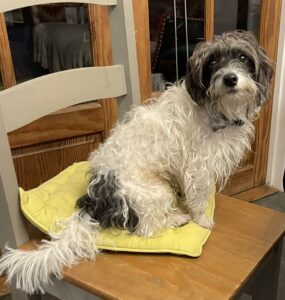 The best course of action is different for each pet.
The truth is that lumps are very common, particularly as pets get older, and many are harmless. Some do disappear without treatment. The difficulty is that it is often impossible to know exactly what a lump is just by feeling it.
The best way to understand what we are dealing with is to investigate properly. Sometimes this means taking a sample of cells with a needle. In other cases, a biopsy gives us much more reliable information. A biopsy is usually a straightforward procedure. The incision is small, often requiring only one or two stitches, and most pets recover very quickly.
After examining Fudge, we agreed that a biopsy would be the best next step. Mrs Davies brought her into the surgery and we carried out a small procedure under anaesthetic to remove a tiny piece of the lump for testing. Fudge was awake, comfortable and back home with Mrs Davies within a few hours.
Then came the difficult part — waiting for the results.
Results
A few days later the laboratory confirmed that the lump was a type of cancer.
Breaking news like this is never easy. We talked carefully through all the options with Mrs Davies. Because only a small sample had been removed, the rest of the tumour was still present in Fudge’s leg.
The cancer was unusual and treatment options varied considerably. One possibility was extensive surgery to try to remove the entire lump. Another was to manage the condition conservatively and focus on maintaining Fudge’s quality of life for as long as possible.
Mrs Davies knew Fudge better than anyone. She felt that aggressive surgery would not be right for her, so together we made a different plan — mild chemotherapy alongside regular monitoring at home.
One of the advantages of home visits is that pets can be assessed in familiar surroundings, without the stress and anxiety that frequent trips to a clinic can sometimes cause. Over the following months we visited Fudge regularly, adjusting her treatment as needed and keeping a close eye on how she was coping.
To everyone’s surprise, and delight, Fudge continued to do remarkably well. 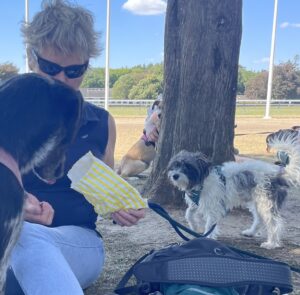
The lump caused her very little discomfort and treatment kept the disease stable for nearly two years. During that time she enjoyed life exactly as she always had — chasing balls around the garden, barking enthusiastically at anyone approaching the front gate and curling up alongside Florence and Fidgit at the end of the day.

Emotional care as well as medical care
At first, Mrs Davies was so worried that she even cancelled a holiday, frightened that Fudge might deteriorate suddenly while she was away. But as the months passed and Fudge continued to thrive, her confidence slowly returned. Eventually she felt able to go away again, reassured that Fudge was happy, stable and enjoying life.
Sadly, after almost two years, Fudge’s condition changed quite suddenly. Her mobility deteriorated, she lost weight, and it became clear that the cancer was finally catching up with her.
Because we had monitored her so closely throughout her illness, Mrs Davies felt prepared for this moment when it came. She knew that every decision had been made with Fudge’s comfort and happiness at the centre of it all.
Fudge was peacefully put to sleep at home, surrounded by the people and dogs she loved most. Fidgit lay beside her as she gently slipped away.
Although losing her was deeply upsetting, Mrs Davies later told us that knowing Fudge had enjoyed such a long period of good quality life after her diagnosis brought her enormous comfort. Instead of remembering only the cancer, she remembered the extra years of normal walks, games, cuddles and happy memories they had been able to share together.